AI Trends 2025: A Guide for Entrepreneurs and Small Businesses
The business landscape is constantly shifting, and it's easy to feel like you're playing catch-up. One thing is certain: artificial intelligence (AI) is no longer a futuristic concept—it's a present-day reality, especially for those running their own businesses.
It might sound intimidating, but AI offers incredible opportunities for entrepreneurs and small businesses. We aren't talking about robots taking over the world. Instead, imagine tools that streamline your operations, provide valuable insights, and help you make better, faster decisions.
This article is designed to be your guide to navigating the AI landscape in 2025. We'll explore key trends, explain why they matter to you, and show you how to put them into action. Think of it as demystifying AI and making it accessible so you can focus on what you do best: building your business.
AI in Business: An Overview
AI refers to the ability of computers to perform tasks that typically require human intelligence. This includes things like learning, problem-solving, and decision-making. It's an umbrella term that encompasses various techniques and technologies, such as machine learning, natural language processing (NLP), and computer vision.
For a long time, AI was primarily the domain of large corporations with vast resources. However, that's changing rapidly. The rise of cloud computing, open-source software, and pre-trained AI models has made AI more accessible and affordable for smaller businesses.
What does this look like in practice? Imagine AI-powered chatbots handling customer inquiries, algorithms predicting sales trends, or software automating repetitive tasks. These are just a few examples of how AI is being used to improve efficiency, enhance customer experiences, and drive growth.
Why AI Matters to Small Businesses and Entrepreneurs
As a small business owner, your time and resources are precious. You're likely juggling multiple roles and constantly looking for ways to do more with less. This is where AI can be a game-changer.
Here's why AI matters to you:
- Increased Efficiency: Automate repetitive tasks, freeing up your time to focus on more strategic activities.
- Improved Decision-Making: Use AI-powered analytics to gain insights into your business performance and make data-driven decisions.
- Enhanced Customer Experiences: Personalize interactions with customers and provide faster, more responsive support.
- Competitive Advantage: Stay ahead of the curve by adopting AI technologies that give you an edge over your competitors.
- Reduced Costs: Optimize operations and reduce waste through AI-powered automation and predictive analytics.
Ignoring AI is no longer an option. The businesses that embrace it will be the ones that thrive in the years to come.
AI Trends to Watch in 2025
So, what specific AI trends should you be paying attention to? Here are some of the most important ones for entrepreneurs and small businesses:
1. Hyperautomation: Streamlining Everything
Hyperautomation goes beyond simple task automation. It's about using a combination of AI, machine learning, and robotic process automation (RPA) to automate as many business processes as possible, from end to end.
Imagine automating the entire order fulfillment process, from receiving the order to shipping the product. Or automating the onboarding process for new employees, from background checks to training.
Hyperautomation aims to create a seamless and efficient workflow, reducing manual effort and errors.

Small Business Spotlight: Boosting Efficiency with RPA
A local accounting firm struggled with the tedious process of reconciling bank statements. They implemented RPA software to automate the data extraction and reconciliation process. This not only freed up their staff to focus on more complex tasks but also reduced errors and improved accuracy. The firm now handles a higher volume of clients with the same number of employees.
2. AI-Powered Customer Experience (CX): Personalized Interactions
Customers expect personalized experiences. AI can help you deliver them at scale. AI-powered chatbots can provide instant support and answer frequently asked questions. Machine learning algorithms can analyze customer data to identify preferences and tailor offers accordingly.
This goes beyond simply addressing the customer by name. It's about understanding their needs and providing them with relevant and helpful information.
Delivering Personalized Recommendations
A small online bookstore used AI to analyze customer browsing history and purchase patterns. They then used this data to provide personalized book recommendations to each customer. This resulted in a significant increase in sales and customer satisfaction. Customers appreciated the tailored recommendations, which helped them discover new books they were likely to enjoy.
3. Democratization of AI: AI for Everyone
AI is becoming more accessible to everyone, regardless of their technical expertise or budget. Cloud-based AI platforms offer pre-trained models and drag-and-drop interfaces that make it easy to build and deploy AI applications without writing code.
This democratization of AI means that small businesses can now leverage AI tools and technologies that were once only available to large corporations.
Accessing AI Without Breaking the Bank
A small bakery wanted to improve its inventory management. They used a cloud-based AI platform to analyze sales data and predict demand. This helped them to optimize their production schedule, reduce waste, and ensure they always had the right amount of product on hand. They were able to achieve this without hiring a data scientist or investing in expensive hardware.
4. AI-Driven Decision Making: Data-Informed Choices
Making informed decisions is crucial for any business, but it can be challenging to sift through vast amounts of data. AI can help you make better decisions by analyzing data, identifying patterns, and providing insights.
AI-driven decision-making can be applied to a wide range of areas, from pricing and marketing to risk management and product development.
Optimizing Marketing Campaigns with AI
A local coffee shop used AI to analyze the performance of its marketing campaigns. The AI identified which channels were most effective at driving sales and which messages resonated most with customers. This allowed them to optimize their campaigns and improve their return on investment. They shifted their advertising budget to the most effective channels, resulting in a significant increase in foot traffic.
5. Natural Language Processing (NLP): Understanding Human Language
NLP is a branch of AI that focuses on enabling computers to understand and process human language. This technology has a wide range of applications, including chatbots, sentiment analysis, and language translation.

NLP can help you improve communication with customers, automate content creation, and gain insights from customer feedback.
Analyzing Customer Sentiment with NLP
A small hotel used NLP to analyze customer reviews and identify areas for improvement. The NLP algorithm identified recurring themes and sentiments in the reviews, allowing the hotel to address specific issues and improve customer satisfaction. This led to better online ratings and increased bookings.
6. Edge AI: Processing Data Closer to the Source
Edge AI involves processing AI algorithms on local devices, such as smartphones, sensors, and embedded systems, rather than relying on cloud-based processing. This reduces latency, improves privacy, and enables real-time decision-making.
For example, a security camera with edge AI can identify suspicious activity and alert the authorities without sending data to the cloud.
Real-Time Inventory Management
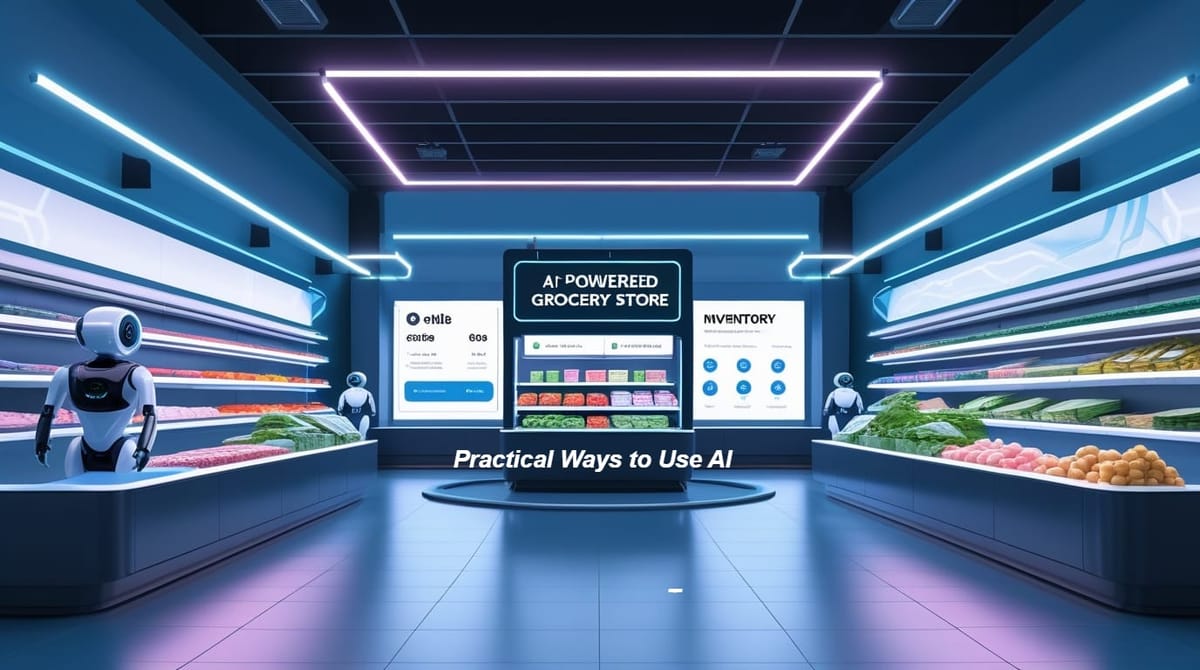
A small grocery store implemented a system using cameras and Edge AI to monitor shelf stock in real time. The system would automatically alert employees when shelves were running low on certain items, allowing for prompt restocking and reducing lost sales due to out-of-stock products. This also helped in optimizing shelf placement based on customer purchasing patterns observed by the AI.
7. Generative AI: Creating New Content
Generative AI refers to AI models that can generate new content, such as text, images, and code. This technology has the potential to revolutionize many industries, from marketing and advertising to product design and software development.
Imagine using generative AI to create marketing copy, design product prototypes, or generate code for new features.
Crafting Engaging Marketing Content
A small clothing boutique used generative AI to create social media posts and product descriptions. The AI was able to generate creative and engaging content that resonated with their target audience, resulting in increased engagement and sales. This freed up their marketing team to focus on more strategic initiatives.
8. Explainable AI (XAI): Understanding the "Why"
As AI becomes more complex, it's important to understand how AI models make decisions. Explainable AI (XAI) aims to make AI models more transparent and understandable, so you can trust their outputs and identify potential biases.
XAI can help you build trust in AI systems and ensure they are used ethically and responsibly.
Building Trust in AI-Powered Loan Applications
A microfinance institution used XAI to understand why its AI-powered loan application system was rejecting certain applicants. The XAI revealed that the algorithm was unintentionally biased against certain demographic groups. The institution was able to adjust the algorithm to remove the bias and ensure fairness in its lending practices.
9. Cybersecurity and AI: Protecting Your Business
As AI becomes more prevalent, it also creates new cybersecurity risks. AI can be used to automate cyberattacks, making them more sophisticated and difficult to detect.
However, AI can also be used to enhance cybersecurity defenses. AI-powered security systems can detect and respond to threats in real-time, protecting your business from cyberattacks.
Enhancing Security Against Cyber Threats
A small e-commerce business implemented an AI-powered cybersecurity system that monitored network traffic and identified suspicious activity. The system detected and blocked a phishing attack that could have compromised sensitive customer data. This protected the business from financial losses and reputational damage.
Preparing Your Business for the AI Revolution
So, how can you prepare your business for the AI revolution? Here are some steps you can take:

- Identify opportunities: Look for areas in your business where AI can help you improve efficiency, reduce costs, or enhance customer experiences.
- Start small: Don't try to implement AI across your entire business at once. Start with a small pilot project to test the waters and learn from your experiences.
- Partner with experts: If you don't have the in-house expertise, consider partnering with AI consultants or solution providers.
- Invest in training: Provide training to your employees to help them understand AI and how to use AI tools effectively.
- Focus on data: AI relies on data, so make sure you have a good data collection and management strategy in place.
- Stay informed: Keep up-to-date on the latest AI trends and developments.
A Step Further: Practical Tips for Implementation
Let's dive deeper into some practical ways to implement AI solutions for entrepreneurs and small businesses.

Automate Email Marketing with AI
AI can help you personalize your email marketing campaigns by analyzing customer data and segmenting your audience. You can use AI-powered tools to create targeted email sequences, optimize subject lines, and predict the best time to send emails.
Real-World Impact: A local florist used AI to analyze customer purchase history and create personalized email campaigns. They sent targeted emails with promotions based on past purchases (e.g., sending offers for roses to customers who previously bought roses). This increased their email open rates and click-through rates, leading to a significant boost in online sales.
Enhance Customer Service with AI Chatbots
AI-powered chatbots can provide instant customer support 24/7. They can answer frequently asked questions, resolve common issues, and escalate complex inquiries to human agents. This improves customer satisfaction and frees up your customer service team to focus on more challenging tasks.
Real-World Impact: A small software company implemented an AI chatbot on its website. The chatbot handled 80% of customer inquiries, freeing up the customer support team to focus on more complex issues. This improved customer response times and reduced customer support costs.
Improve Inventory Management with Predictive Analytics
AI can help you predict demand and optimize your inventory levels. By analyzing historical sales data, seasonal trends, and other factors, AI can forecast demand and recommend optimal inventory levels. This reduces waste, minimizes stockouts, and improves cash flow.
Real-World Impact: A small clothing boutique used AI to predict demand for its products. This helped them to optimize their inventory levels, reducing stockouts and markdowns. They were able to increase sales and improve profitability.
Optimize Pricing with AI
AI can help you optimize your pricing strategy by analyzing market data, competitor prices, and customer behavior. AI-powered pricing tools can recommend optimal prices for your products and services, maximizing your revenue and profitability.
Real-World Impact: A small online retailer used AI to optimize its pricing strategy. They were able to increase their revenue by 10% without sacrificing sales volume.
Elevate Content Creation with AI Tools
Many accessible AI tools can aid in drafting social media posts, generating blog topic ideas, or even creating initial outlines for longer content pieces. Experiment with tools that can assist you in brainstorming and streamlining your content creation process.
Final Thoughts
The AI revolution is here, and it's presenting huge opportunities for entrepreneurs and small businesses. By understanding the key trends and taking steps to prepare your business, you can harness the power of AI to improve efficiency, enhance customer experiences, and drive growth. Don't be afraid to experiment and learn. The future of business is AI-powered, and the time to get started is now.
If you'd like to explore how we can help you implement AI solutions tailored to your unique business needs, don't hesitate to contact us. We are here to guide you through the process and empower you to thrive in the age of AI.